
Post-Processing
Expert post-processing that turns a printed blank into a reliable industrial component.
Metal Post-Processing
Metal printing technology enables even the most complex geometries, but the ultimate part quality is achieved through expert post-processing. With a precisely planned post-processing workflow, we ensure dimensional accuracy, tailor material properties, and perfect the surface finishes.
This is how a printed blank is refined into a reliable industrial component that perfectly serves your exact needs.
Heat Treatments
Heat treatment provides the capability to relieve residual stresses, particularly in components with complex or challenging geometries. In addition to stress relief, it enables the modification of mechanical properties. Through heat treatment, material characteristics such as ductility, hardness, and strength can be tailored to meet the specific requirements of the application.
Machining
While metal printing offers incredible geometric freedom, critical features often require traditional subtractive manufacturing. CNC machining and turning are utilized on specific functional areas to achieve tight tolerances, exact straightness, and optimal surface finishes for components such as bearings, seals, and shafts. Threads also require a machining phase after printing.
Polishing
Polishing techniques—such as barrel polishing with abrasive media, manual polishing, and electropolishing—are used to modify the surface roughness typical of metal prints. These methods effectively smooth out surface peaks, remove minor irregularities, and significantly improve the fatigue life and aesthetic appearance of the part.
Coating
Metal coatings, such as anodizing, electroplating, or chemical passivation, add a highly functional protective layer to the printed component. These specialized surface treatments are deployed to maximize surface hardness, provide advanced wear protection, enhance corrosion resistance, or introduce specific electrical insulation properties.
Painting
Industrial wet painting and powder coating provide an additional layer of environmental protection while delivering a specific aesthetic finish. Powder coating is particularly excellent for aluminum components, providing a highly durable barrier.
Polymer Post-Processing
After completing an MJF or SLS build cycle, the printed polymer parts are unpacked and de-powdered, leaving a raw, characteristic surface texture and colour. Applying specialized polymer post-processing steps allows us to enhance this natural surface structure, elevate their aesthetic quality, completely seal the components against fluids, or prepare them for advanced mechanical assembly and integration.
Dyeing
Dyeing is the standard method for coloring MJF and SLS parts, using a deep-dyeing fluid bath. The color pigments penetrate the outer polymer layer directly, creating a perfectly uniform matte finish that is highly scratch-resistant and does not alter the critical dimensional tolerances of the component.
Painting
Technical spray painting is applied when components require specific aesthetic finishes or exact RAL or Pantone color matching. This process adds a durable cosmetic layer to the outer surface, which can also provide enhanced UV stability and excellent resistance against harsh environmental weathering.
Micro Coating
Micro coating involves applying an ultra-thin, highly functional protective layer over the polymer part. This specialized process is used to seal the natural surface structure of printed plastics, providing an excellent barrier against gases, oils, and liquids while simultaneously adding chemical resistance without altering part geometry.
Vapor Smoothing
Vapor smoothing uses a controlled chemical vapor process to briefly melt the outer peaks of the polymer surface. As it solidifies, the surface becomes perfectly smooth and completely sealed. This drastically lowers surface roughness, enhances the material texture, increases elongation at break, and makes the parts exceptionally easy to clean.
Threading
Threading involves cutting or tapping functional threads directly into the printed polyamide matrix. This is a fast and highly cost-effective method for creating reliable fastening points intended for low-load applications or components that do not require frequent disassembly over their lifespan.
Inserting
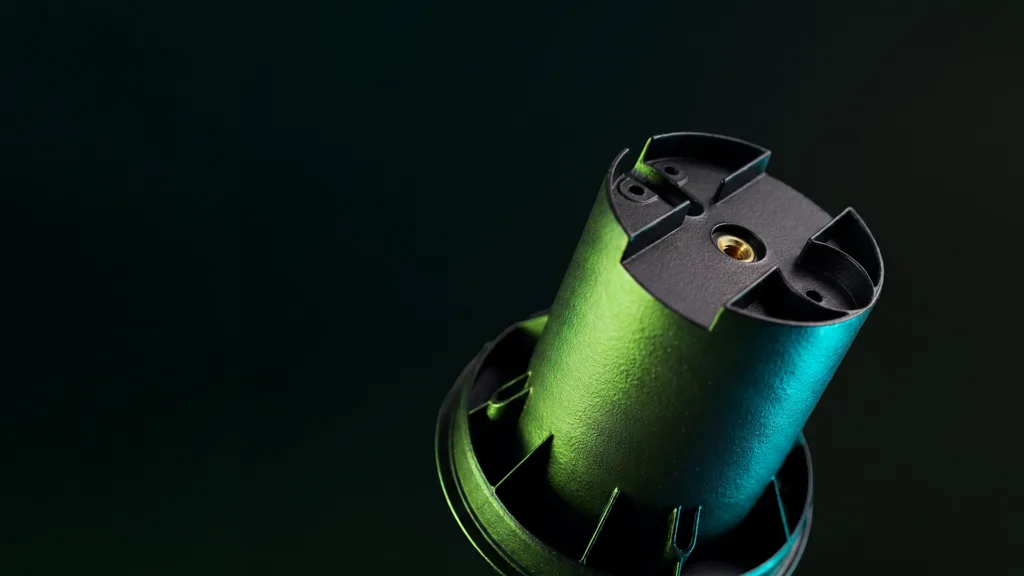
Inserting involves installing metallic inserts into pre-designed printed cavities, primarily using screw-in thread inserts and occasionally heat-set inserts. This creates durable, high-strength bolted connections capable of handling high torque and frequent assembly cycles without risking damage to the plastic frame.
Assembly
Assembly services combine multiple printed components with standard industrial hardware, such as bearings, seals, screws, or electronics. This ensures you receive a fully integrated, functional sub-assembly straight to your production line, saving you internal logistical, sourcing, and manual assembly time.

Already know what you need?
Order fast online: upload your design, select material and finishing, get a price. No waiting for a quote.
3D printing options
Compare our metal and polymer 3D printing technologies, materials and finishing options to find the right route for your part.
Certified quality and testing
Validate your parts with ISO 9001 certified processes, documented material data and third-party testing when required.