
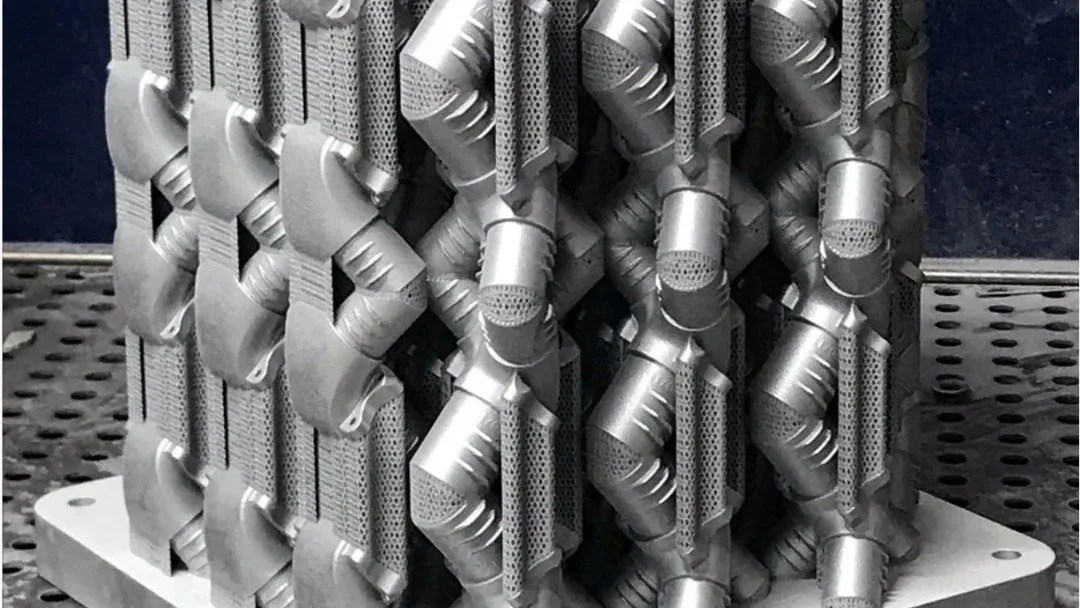
Most defence development programmes treat manufacturing as a downstream concern. The design is defined, validated, and approved before anyone seriously asks how the part will be produced. By that point, changing the geometry to suit a different production method carries significant cost and programme risk. AM becomes an option only for what was already designed, which means most of its advantages never materialise.
For R&D and engineering leads in defence, that sequencing has consequences worth examining closely.
The speed advantage in AM comes from what happens before the drawing is finalised
When AM is part of the design process from the start, iteration cycles compress significantly. A component that would take months to prototype through conventional tooling can be in hand within days and revised within the same week. For defence programmes where field requirements evolve faster than traditional development timelines allow, that compression changes what is achievable within a programme cycle.
The organisations capturing this advantage are not simply printing faster. They are making more decisions earlier, with physical evidence in hand, before those decisions become expensive to reverse.
Engineering leads who treat AM partners as development partners reach production with better components
3DStep has delivered functional components for demanding defence applications, including protective cases for data radio sets designed for field conditions, produced in MJF PA12 and assembled ready for use. These are serial production parts, not prototype runs. They exist because the engineering conversation started before the design was locked.
When manufacturing knowledge enters the development process early, the geometry can be optimised for the production method. Weight comes down. Assembly steps consolidate. The part that reaches production is one that conventional manufacturing could not have produced at the same cost or lead time.
Most defence programmes sequence manufacturing knowledge out of the design phase
The standard assumption is that a qualified part requires an established production process defined after design freeze. That model has logic behind it: it controls change, manages risk, and fits procurement frameworks built around fixed specifications. It also means AM is evaluated against a design it had no part in shaping, which structurally limits what it can contribute.
The same sequencing creates supply chain vulnerability. Parts sourced from outside Europe, or dependent on legacy suppliers with long lead times and minimum order requirements, become critical risks when operational tempo increases. The procurement framework that felt stable in a lower-tempo environment looks different when urgency is real.
What R&D and engineering leads running active programmes are doing differently
The programmes building genuine AM competence are involving manufacturing partners before design freeze, not after. They are asking what the process makes possible, not just whether a finished design can be produced. That shift is visible in the components they are fielding and the timelines they are operating on.
For engineering leads who have not yet made that change, the relevant consequence is not a missed efficiency. Programmes that develop this competence now are building a development and supply chain architecture that their counterparts will spend the next several years trying to replicate.