
Earlier this year, 3DStep hosted a workshop bringing together UX researchers, students, and practitioners to explore what industrial 3D printing makes possible in product development. The conversations confirmed something we see repeatedly with industrial clients: the organizations getting the most out of AM are not necessarily the ones with the biggest budgets. They are the ones where design competence and manufacturing knowledge develop together.
Most industrial designers know how to use CAD software. Few know how to design parts that actually leverage what industrial additive manufacturing makes possible. That gap matters more than most R&D directors yet realize.
The real reason prototype timelines vary has nothing to do with the machine
When a part’s geometry is designed for AM production from the start, you can have a physical prototype in hand within a week. When the same part is designed with conventional manufacturing logic and AM is treated as just an alternative production method, the timeline multiplies. Each iteration cycle stretches. Decisions wait on physical evidence that arrives too late to be useful.
In most cases, the drawing is the bottleneck.
Designers who understand AM ask a fundamentally different question
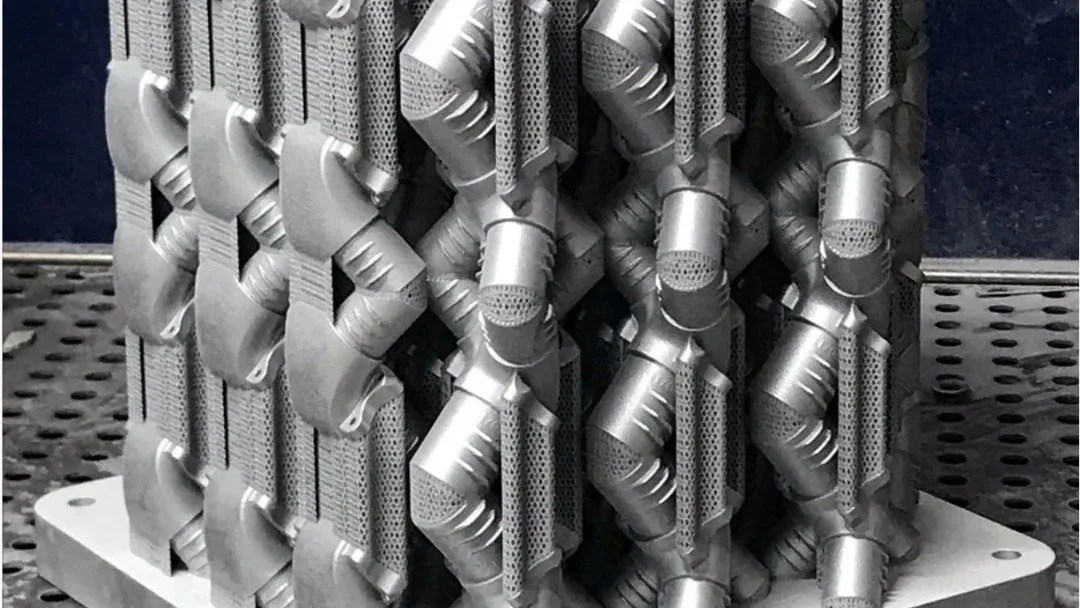
A designer who understands industrial AM stops asking “can this be printed?” and starts asking “what becomes possible if I design specifically for this process?” That shift opens up geometries that cannot be machined, internal structures that reduce weight without sacrificing strength, and consolidated assemblies that previously required five separate components.
These parts are in production today, across defence, process industry, and manufacturing. The companies behind them made a deliberate decision to develop AM competence at the design stage, not just at the procurement stage.
Most companies put AM competence in the wrong department
A common assumption is that AM competence belongs to the procurement or manufacturing function. Find a capable supplier, send the STEP file, receive the part. That model works for commodity components. It leaves significant value on the table for anything more demanding.
The organizations moving fastest are those where design and production knowledge develop together, where a designer can call a manufacturing engineer early in the process and not after the drawing is locked.
What R&D leaders who are closing the gap are doing differently
For R&D leaders, the relevant question is not whether your organization uses 3D printing. The question is whether your designers understand what industrial AM actually makes possible, and whether your development process gives them the space to use that knowledge.
The companies that figure this out earlier are compressing development timelines, reducing part counts, and reaching production with geometries their competitors have not considered yet.